
Hakataza: Kyushu’s Premier Destination for World-Class Theater
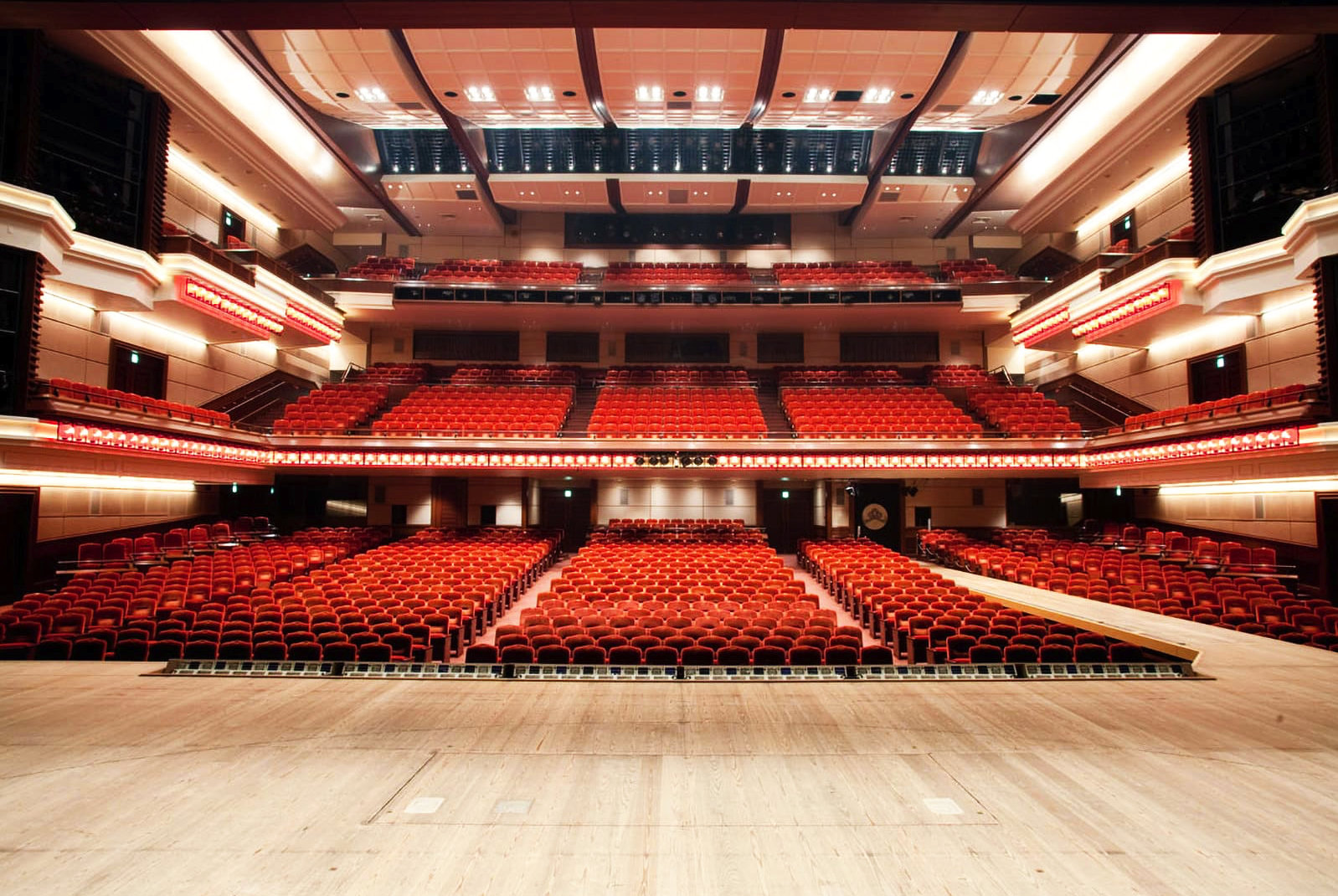
Established in 1999, Hakataza is the largest theater in the Kyushu region and stands as one of Japan’s preeminent cultural landmarks.
As a world-class venue, it is uniquely engineered to host a diverse array of productions, ranging from traditional Kabuki and grand musicals to the spectacular Takarazuka Revue and straight plays. To accommodate such a wide spectrum of performances, the theater is equipped with state-of-the-art stage technology, including an elevator stage and an evolving stage, a traditional hanamichi runway, and a full orchestra pit.
The auditorium features a sophisticated three-tiered seating layout with a maximum capacity of approximately 1,500 guests, ensuring an intimate yet grand experience for every audience member.
Hakataza’s advanced acoustic infrastructure is engineered to meet the rigorous demands of a diverse repertoire, from grand musicals and straight plays to the nuanced sounds of Kabuki and the Takarazuka Revue.
In an era of rapid artistic evolution, we continuously explore how performing arts intersect with modern spaces. Our mission is to anticipate the acoustic requirements of future productions while providing a versatile environment that flawlessly translates a director’s creative vision into an immersive auditory experience.
Overcoming Signal Challenges in Traditional Performance
Operating wireless microphone systems in a venue like Hakataza presents unique technical hurdles. In many productions, including Kabuki, performers wear elaborate kimonos—traditional garments consisting of multiple layers. These costumes often incorporate gold and silver threads, which can shield transmitters and severely hinder signal reception.
Furthermore, because the theater’s receiving antennas are permanently installed, large and complex stage sets can occasionally obstruct the line of sight, creating “dead zones” and affecting overall audio stability.
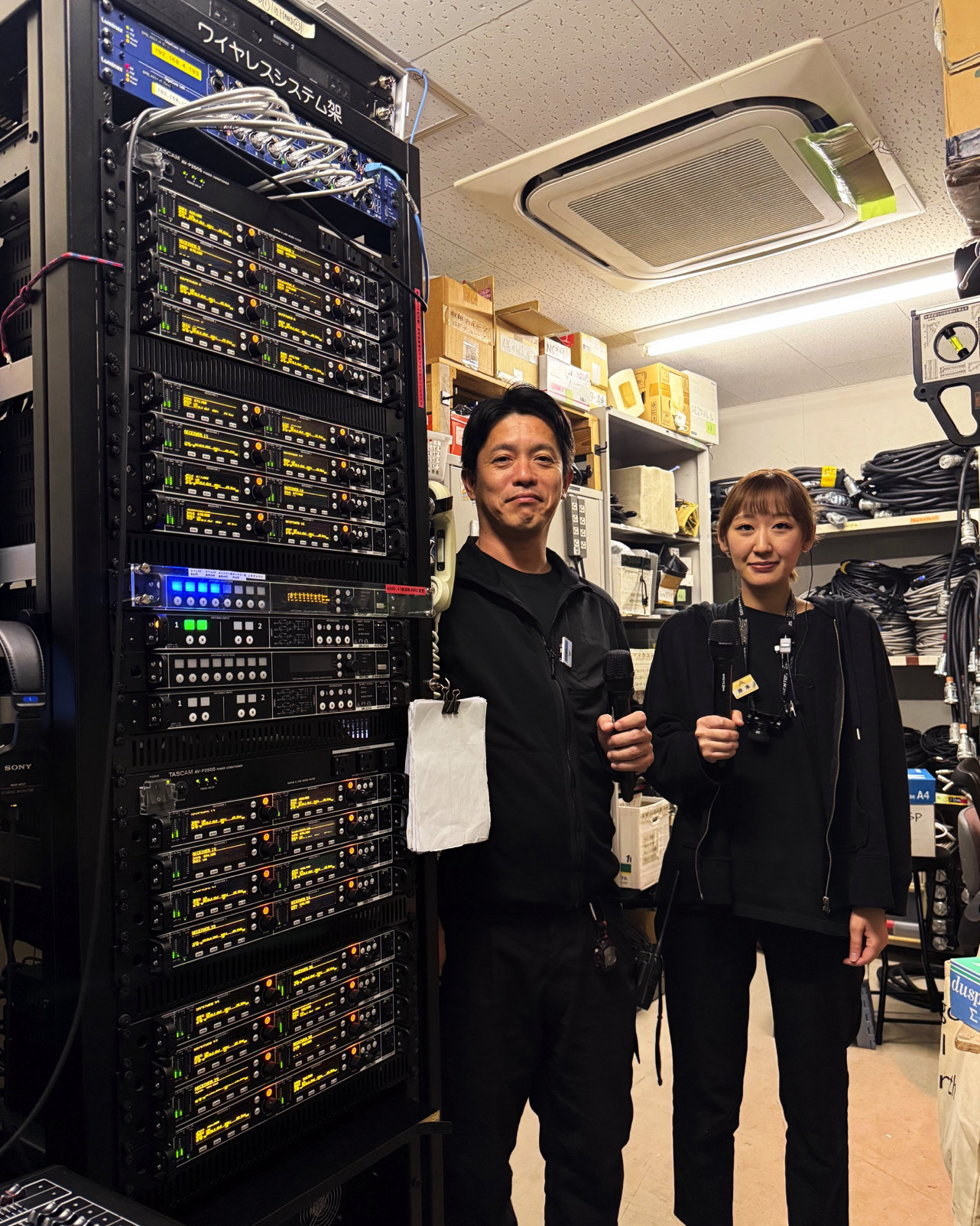
Mr. Yoshihiro Tsubone, Sound Engineer of Hakataza Theater
Ms. Moemi Kishimoto, Sound Engineer of Hakataza Theater
Discovering the Wisycom Advantage
Our introduction to Wisycom’s wireless systems immediately redefined our expectations for audio clarity. The first thing we noticed was the exceptionally crisp sound quality; even the most subtle, low-level inputs were captured with stunning precision. This allowed us to achieve a natural, comfortable soundscape at lower output levels than previously possible.
Beyond audio performance, the durability of the transmitters proved excellent. The versatility of Wisycom’s antenna solutions—specifically the MAT288 antenna matrix combiner—gave us a significant strategic advantage. It allowed us to design tailored antenna plans for every production, ensuring a flawless reception environment regardless of the stage setup.
Key Solutions and Technical Highlights
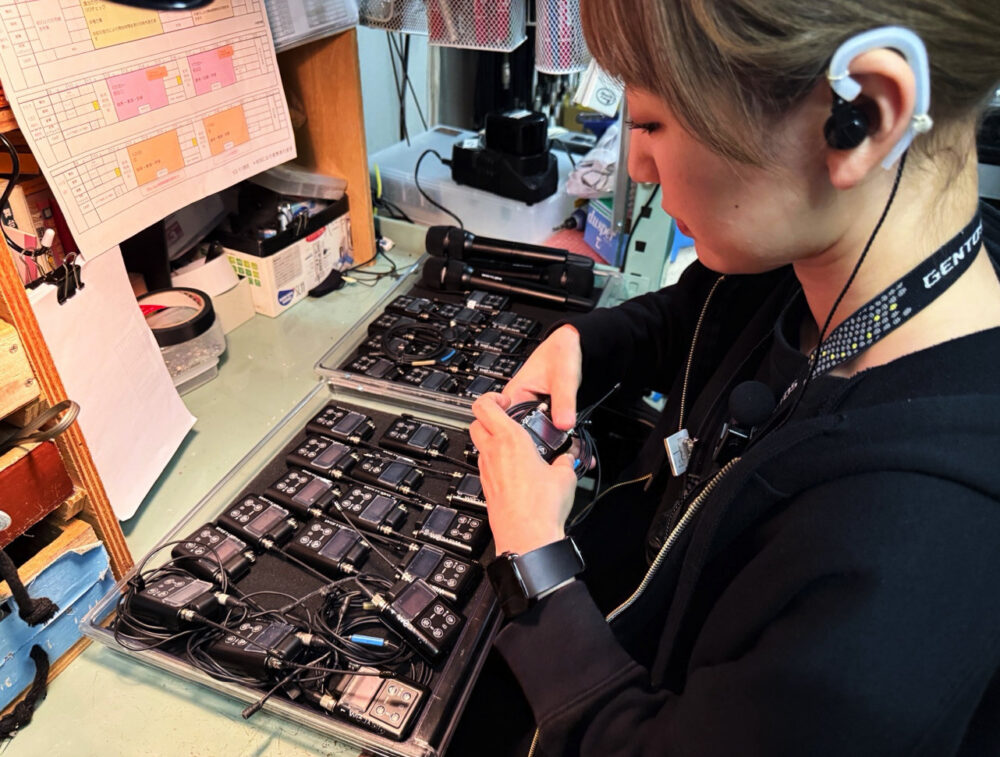
MTP61 Miniature Transmitter
The compact and lightweight design of the MTP61 has been a game-changer for our performers. Its small footprint allows for easier concealment within costumes, which has directly improved signal reception—a long-standing challenge for our team. Unlike larger transmitters from other brands, the MTP61 does not interfere with the actors’ movements, earning high praise from the cast. Furthermore, the shift to the MTP61 allowed us to move from disposable batteries to a rechargeable system, significantly reducing our long-term operating costs.
MRK980 Receiver, MAT288 & SPL2216
The integration of the MRK980 receiver with the MAT288 matrix and SPL2216 splitter has created an incredibly robust reception environment. This configuration has expanded our AF (Audio Frequency) output options, streamlining the recording process and greatly improving our overall workflow efficiency.
Wisycom Manager Software
The Wisycom Manager software has transformed our daily operations. Monitoring is now more intuitive and efficient, and tasks such as frequency coordination can be performed with ease. The result is a more reliable, streamlined, and professional workflow for the entire technical team.